Sedges have edges & rushes are round. Grasses have joints on their way to the ground.
plant dying: mordants
Site Directory
Hemp Dogbane
(Apocynum cannabinum)
-
Fun Facts
- aka: indian hemp,
- toxic when eaten without proper preparation
- vaso-contrictor: blood vessels narrow -- raise blood pressure
- lots of possible medicinal uses - e.g. dandruff, lice, diahrrea, inflammation, warts, etc etc
-
Range/Habitat
- Native to N. America
-
Physical:
- leaf: opposite, simple, lanceolate. white hairs on underside,
- flower: five petals ("five lobed corolla"), large base in comparison to petals (large sepals)
- stem: reddish, leak white fluid like Norway Maple and Milkweed when broken.
- Links:
- inaturalist
- wikipedia
- check out my cordage page
- NRCS Plant Guide

European Bugleweed
(Lycopus europaeus)
-
Fun Facts
- aka: European Water-Horehound, gipsywort
- can use the roots to dye fabric gray or black, depending on the mordant
- mordant: substance that fixes the dye to the fabric - e.g. tannic acid, sodium chloride, aluminium, chromium, copper, iron, sodium, lead, and tin
-
Range/Habitat
- wetlands, marshes, etc. very wet soil. happy in river floating gardens.
- native to eurasia
- introduced to N. America - olympic peninsula, east of the great lakes, remains around 45˚-50˚N
-
Physical:
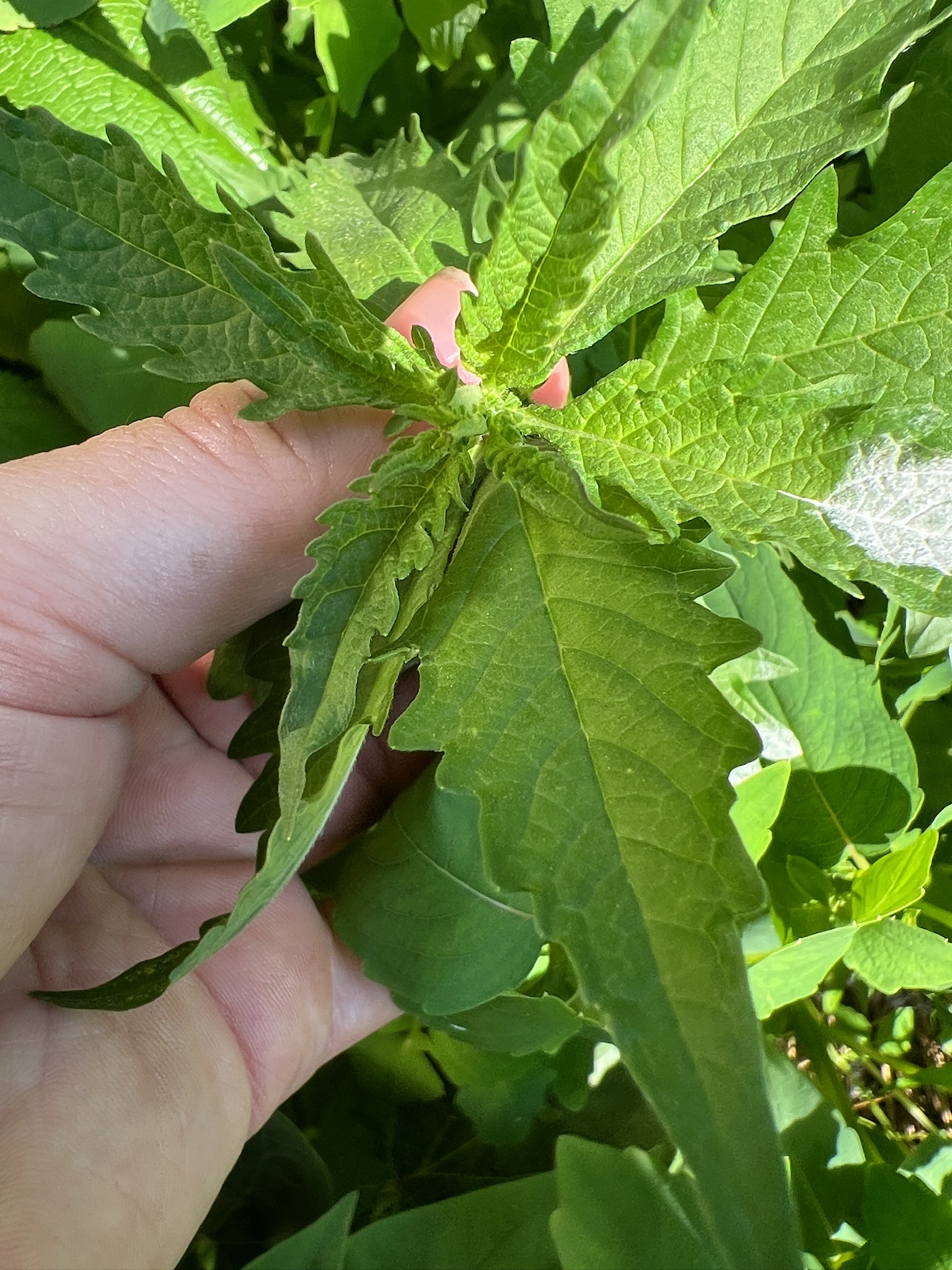
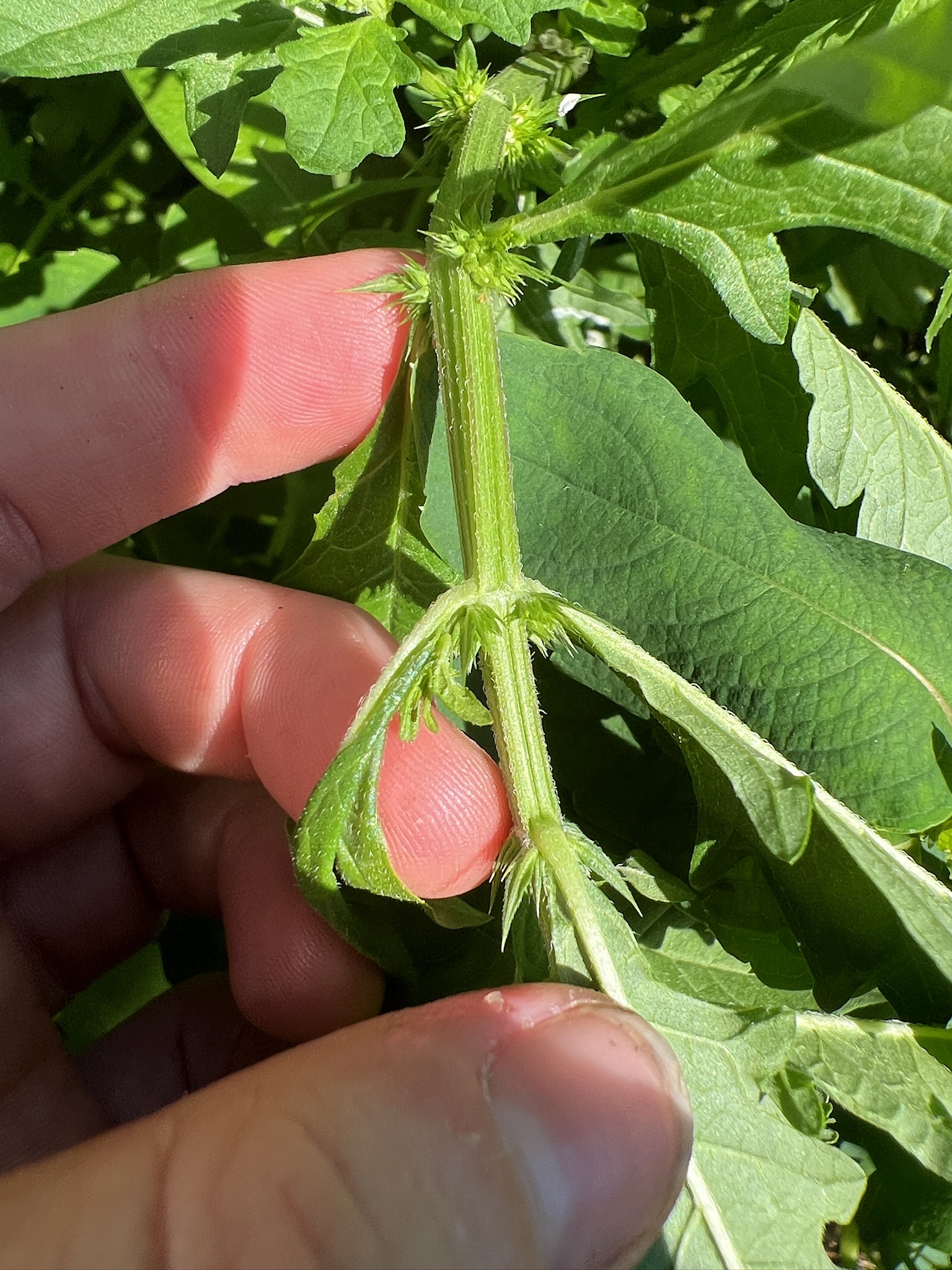
- leaf: opposite, simple, oval. Serrated with large teeth.
- flower: small white flowers at the nodes.
- stem: square around with defined edges.
- similar to blue vervain - vervain has purpl-ish stem and bugleweed tends to grow as a vine and flowers at the nodes.
- Very similar to American Bugleweed (and the many other bugleweeds) - american bugleweed has deeper lobes inbetween teeth of leaves.
- Links:

Lady's Thumb Smartweed
(Persicaria maculosa)
-
Fun Facts
- aka: spotted lady's thumb, redshank, oriental ladysthumb, asiatic smartweed
- named for the marking on its leaf - doesn't always have the marking
- creates a yellow dye
-
Range/Habitat
- native to eurasia
- introduced/invasive to n. america
- disturbed areas, wetlands, open moist dirt.
- full sun, partial shade
- Physical
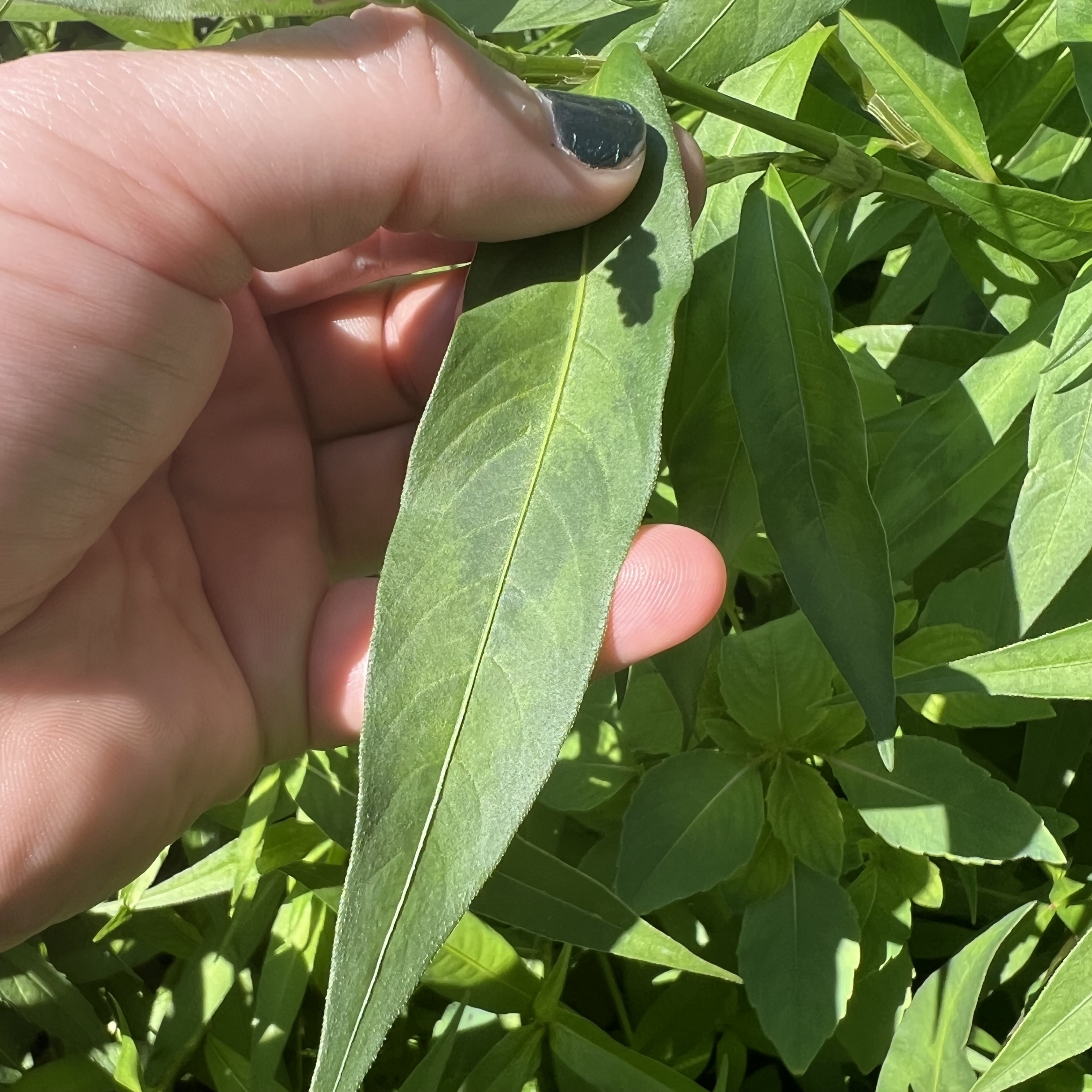
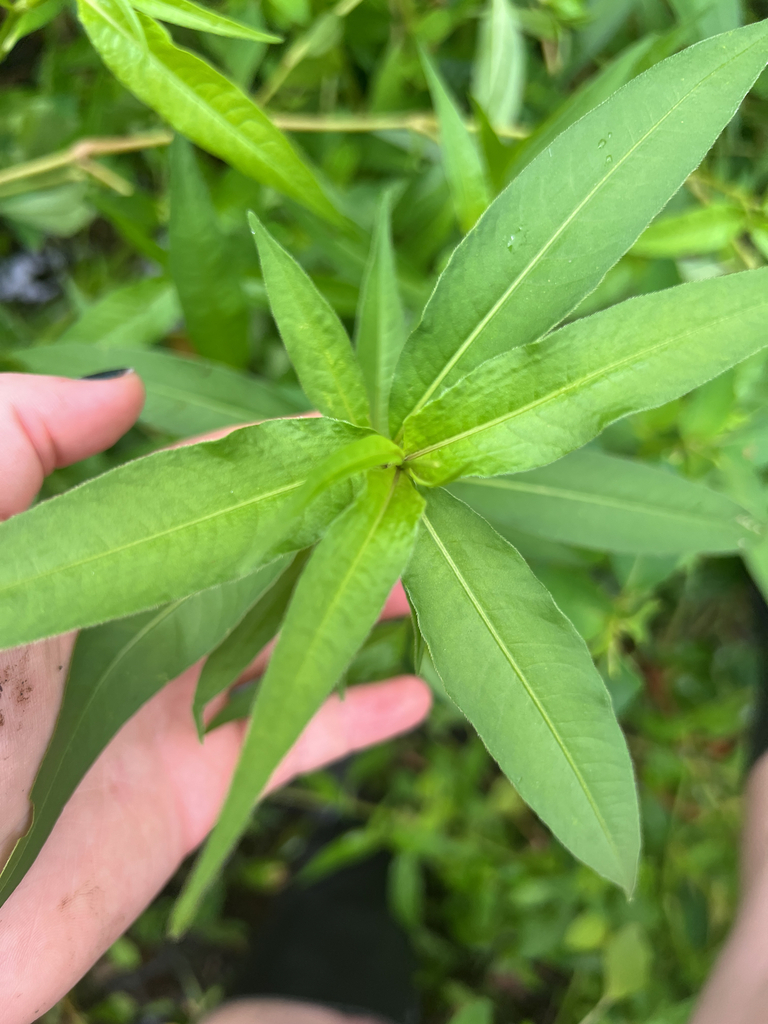
- leaves: alternate, lanceolate, green with black/brown spot in the center.
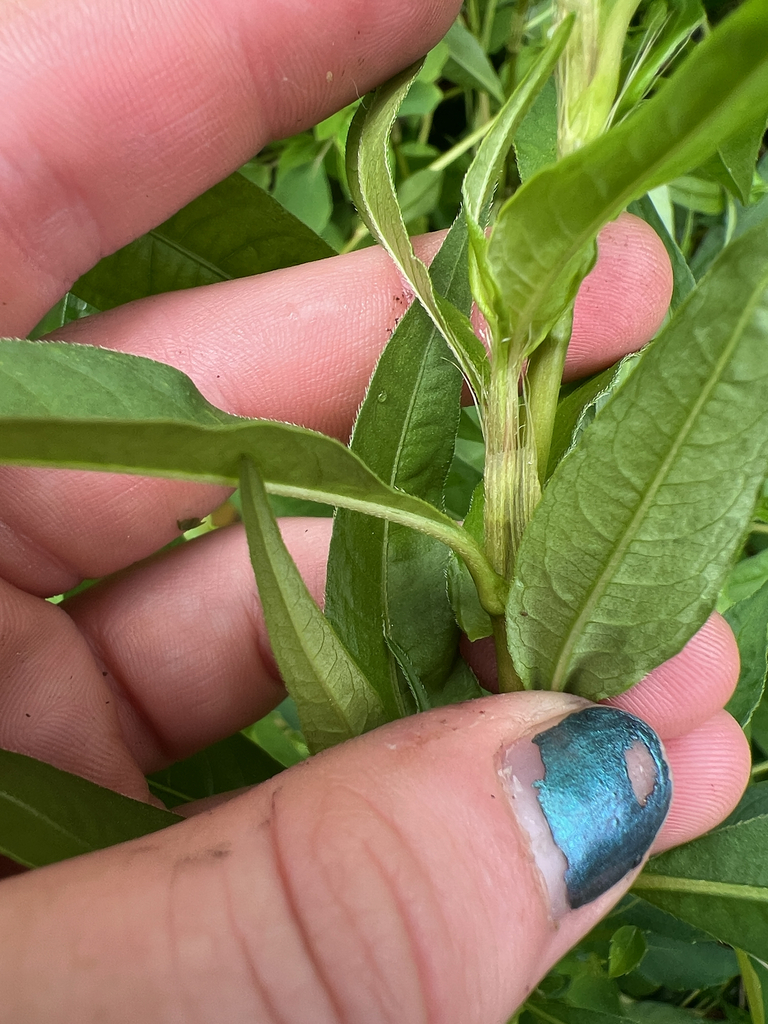
- stalk: jointed, swollen joints, floppy
- flower: vertical clusters, small & pink. Think goldenrod, but pink and vertical. a "spike". Can have hairs inbetween the flowers.
- similar to pennsylvania smartweed - lady's thumb has long hairs at the top of the ochreas.
- an ochrea is a sheath around the stem at the base of the leaf stem



Pennsylvania Smartweed
(Persicaria )
-
Fun Facts
- aka:
-
Range/Habitat
- Physical
- leaves:
- stalk:
- flower:
Stout Smartweed
(Persicaria robustior)
-
Fun Facts
- aka:
-
Range/Habitat
- Physical
- leaves:
- stalk:
- flower:
Swamp Rosemallow
(Hibiscus moscheutos)
-
Fun Facts
- aka:
-
Range/Habitat
- Physical
- leaves:
- stalk:
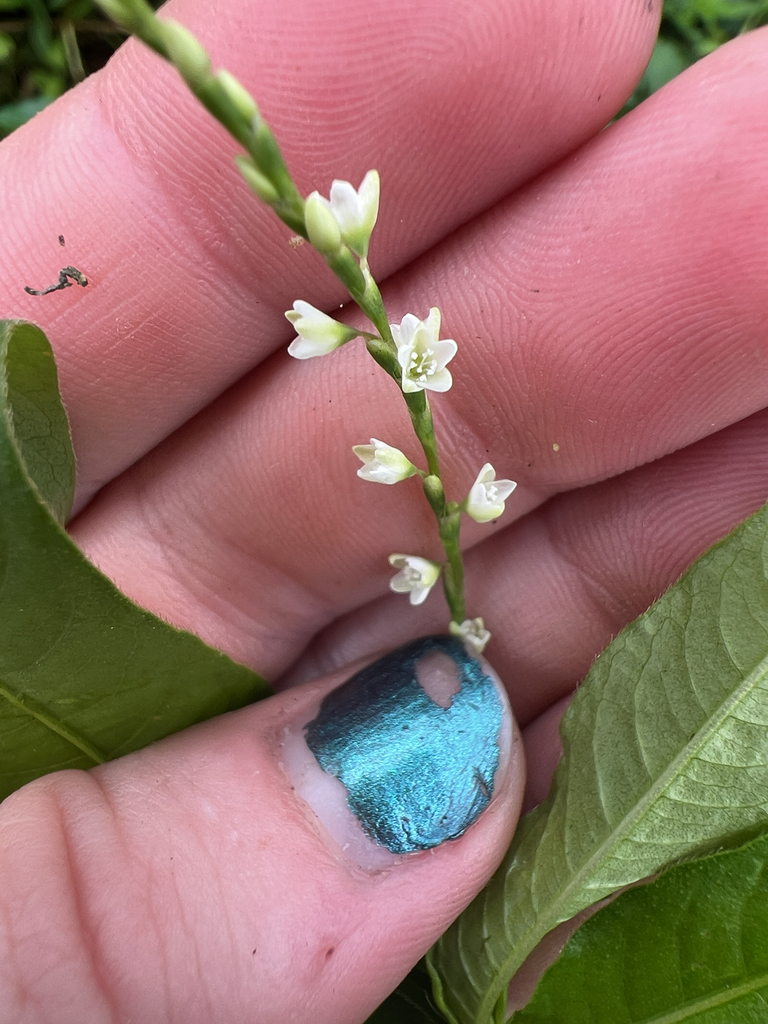
- flower: large, 5 petals, range from white to hot pink - sometimes with a dark red center.
- overall


Blue Vervain
-
Physical:
- leaf:
- flower: small and purple (not blue),
- stem:
- similar to bugleweed - vervain has purpl-ish stem, bugleweed tends to grow as a vine and flowers at the nodes.


Lizard's Tail
(Saururus cernuus)
-
Fun Facts
- aka: swamp root, water dragon
- a favorite food for beavers
- commonly used in wetland restoration
-
Range/Habitat
- native to eastern n. america (southern canada)
- freshwater wetlands, saturated soil, shallow water, full sun to partial shade.
- time: april through september
- Physical
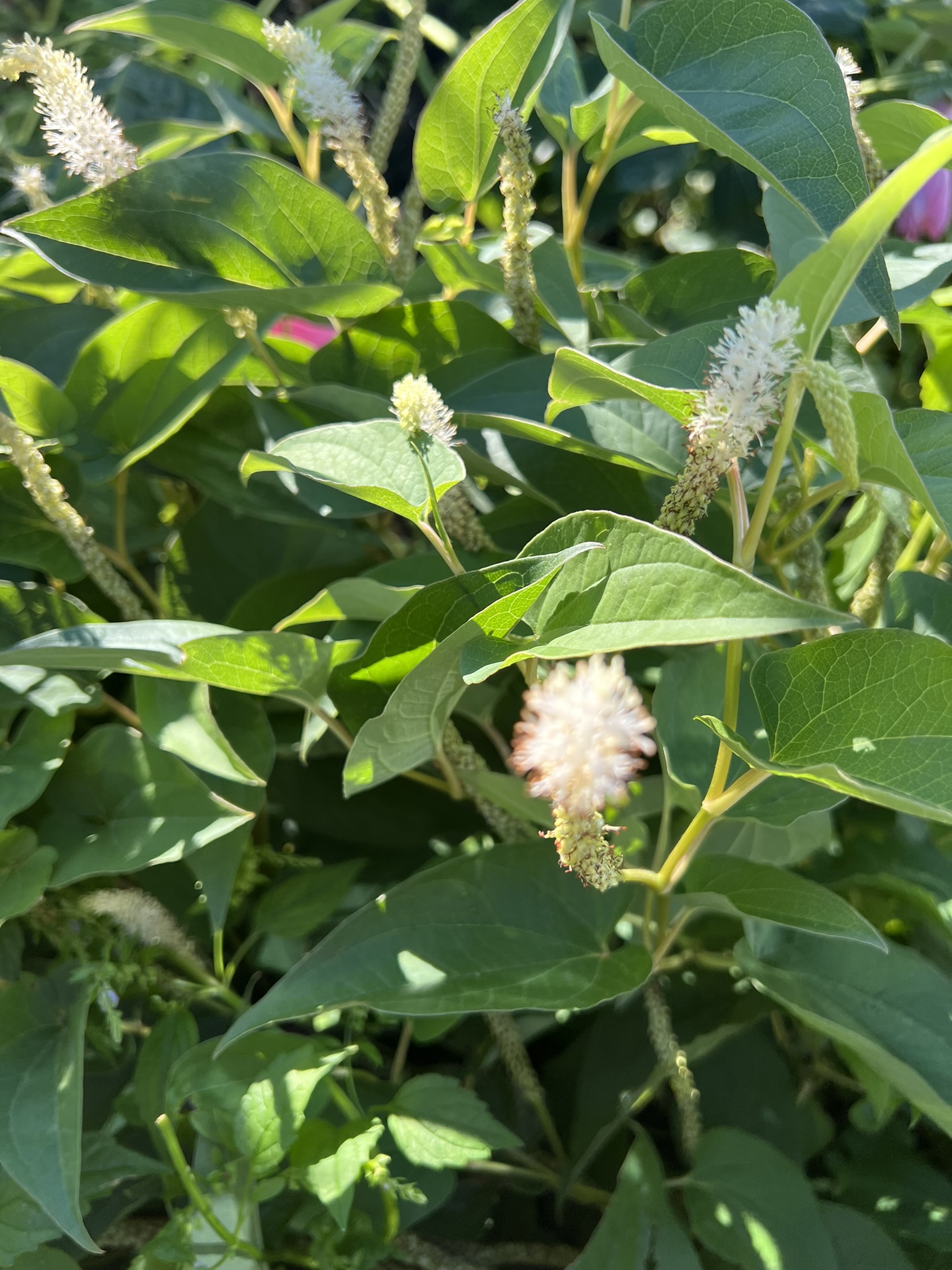
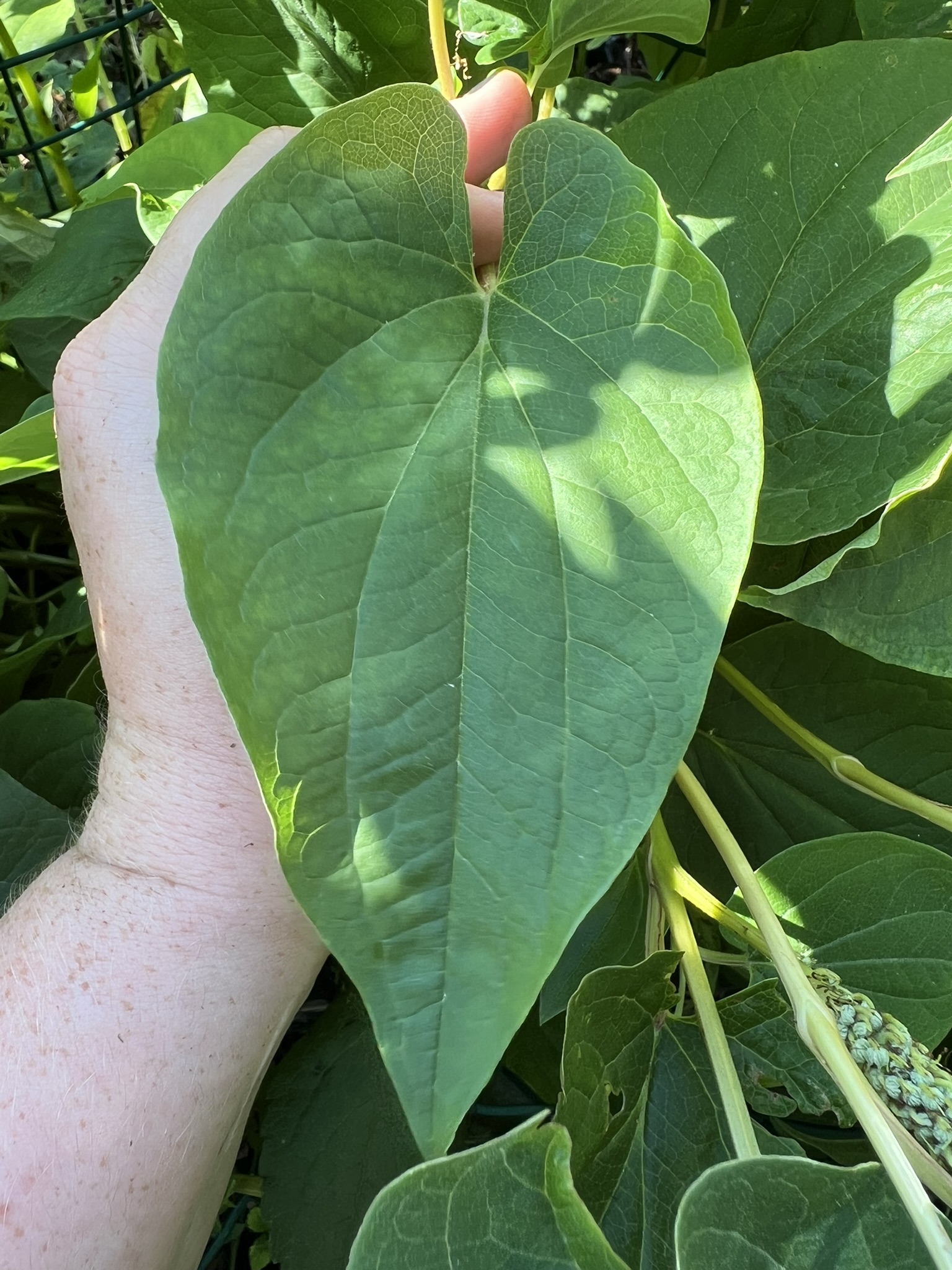
- leaves: alternate, dark green, can heart shaped (cordate), arrow shaped, or lanceolate. when crushed smells of citrus.
- stalk: height of 1-2ft
- flower: 6-8 inches long, lots of small white flowers from one main stem (bottlebrush), looks like the shape of a lizards tail. flowers turn brown after maturing.
- root: rhizomes and stolons (stem horizontal along ground, sprouts upwards, creates colonies)

The Magnificent Bryozoan
(Pectinatella magnifica)
-
Fun Facts
- freshwater colonies of tiny tiny animals, much like coral
- each individual tiny tiny animal is called a 'zooid'
- feels like jello when you pick it up
-
Range/Habitat
- found throughout the USA, Europe, and Japan
-
Physical:
- each tiny animal
- the colony
- star-esque shapes along the outside, slightly more solid than the rest
- overall translucent like jello - brownish
- Links:

